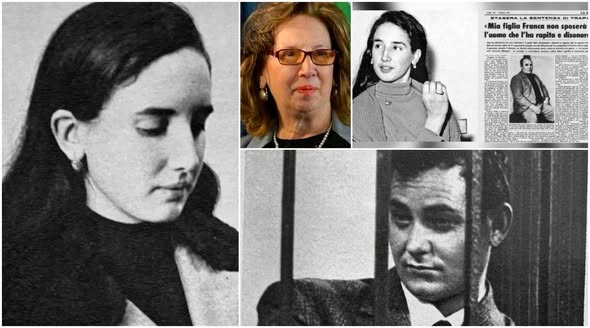
At just 17 years old, Franca Viola was told her future could only follow one of two painful paths: marry the man who had violated her or carry a lifetime of shame imposed by society. But she refused to accept either fate. Instead, she made a choice no one expected—one that would not only redefine her own life, but eventually reshape the laws of an entire nation. 💔✨
In 1965, in the small Sicilian town of Alcamo, Franca had recently ended a relationship with Filippo Melodia, a man with ties to organized crime who could not accept rejection. On December 26, her life took a terrifying turn when Melodia, accompanied by armed men, broke into her family home. Her mother was brutally beaten, and Franca was abducted along with her young brother, who tried desperately to defend her. He was released shortly after—but Franca remained captive for eight long days, enduring unimaginable trauma and constant pressure to agree to marriage. 😢
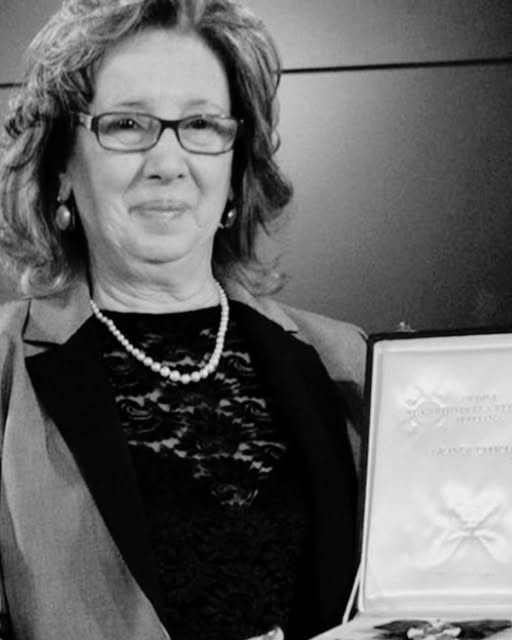
At that time, such a demand was not only rooted in tradition—it was supported by law. Under Article 544 of the Italian Penal Code, a man could avoid punishment for rape if he married his victim, in what was called “matrimonio riparatore.” The idea was that marriage would “restore” a woman’s honor, as if the crime had diminished her worth. The burden of shame fell entirely on the victim, while the perpetrator could walk free. In a world that was otherwise moving forward—an era of cultural revolutions and scientific breakthroughs—this harsh reality still defined the lives of many women.
When Franca was finally released, the expectations placed on her were overwhelming. Her community, shaped by deeply rooted traditions, assumed she would remain silent and accept the marriage, just as countless women before her had done. Even within her own circle, there were voices urging her to follow the expected path. But Franca made a decision that stunned everyone around her. She refused. With her father standing firmly by her side, choosing his daughter’s dignity over social approval, she took an extraordinary step—she brought her attacker to court. 💪
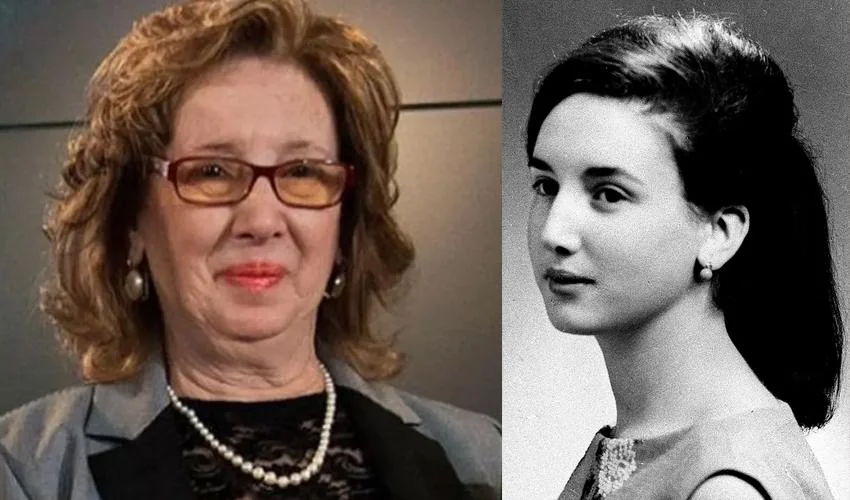
The consequences were immediate and severe. Her family faced hostility, isolation, and even acts of violence. Neighbors turned against them, and their property was attacked. In a region where honor codes often carried more weight than formal law, and where fear of mafia influence was real, defying such norms came with serious risks. Yet Franca remained unshaken.
The trial quickly became a national sensation. Newspapers across Italy followed every development, and for the first time, the public was forced to confront a legal system that protected perpetrators while silencing victims. In 1966, Melodia was convicted and sentenced to prison. Franca became the first woman in Italian history to openly reject “rehabilitating marriage” and win justice in court—a moment that marked the beginning of change. 🙌
Her bravery did not go unnoticed. Influential figures, including President Giuseppe Saragat and Pope Paul VI, met with her, signaling that her stand had sparked a deeper national reflection. A few years later, in 1968, she married Giuseppe Ruisi, a man who loved and respected her unconditionally. Their union became a quiet but powerful statement—one built on dignity, not obligation. ❤️

Still, the law itself remained unchanged for years. It took more than a decade of advocacy, cultural evolution, and the courage of others inspired by Franca’s example before real reform arrived. Finally, in 1981, Article 544 was abolished. From that moment on, no perpetrator could escape justice through forced marriage.
Though her actions helped transform the legal and social landscape of Italy, Franca never sought attention. She chose a private life, surrounded by her family, بعيد from the spotlight. Yet her story continues to resonate far beyond her quiet world.
Because sometimes, it takes just one person—one voice willing to say “no”—to challenge what everyone else accepts as inevitable. Franca Viola proved that honor is not something others can take away. It lives in courage, in resilience, and in the refusal to let injustice define one’s worth.
She was only 17 when fear, pressure, and tradition demanded her silence. She chose to speak through her actions instead. And because of that, Italy—and the world watching—would never be the same. 💫