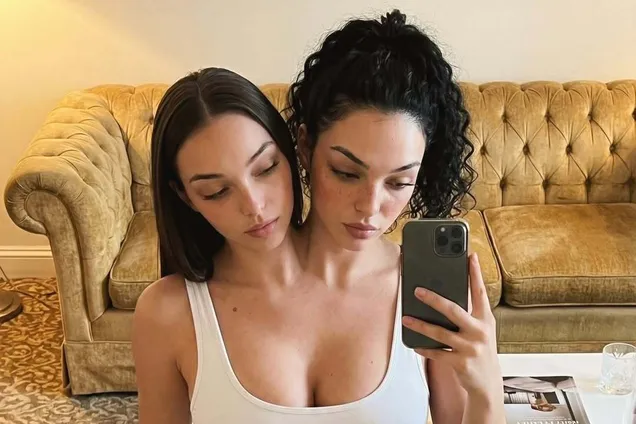
A flashy Instagram profile claiming to showcase glamorous conjoined twins skyrocketed to nearly 290,000 followers within weeks. But according to digital forensics specialists, the entire identity is a carefully engineered AI illusion—crafted to tap into curiosity, sympathy, and the viral pull of the extraordinary.
Since mid-December 2025, the account @itsvaleriaandcamila has drawn massive attention with polished images of two young women allegedly joined at the neck, sharing one body but having separate heads. Presenting themselves as 25-year-old Floridians named Valeria and Camila, the “twins” display a picture-perfect lifestyle: posing in bikinis, enjoying upscale restaurants, socializing with equally flawless friends, and answering deeply personal questions about dating, jealousy, and life in a shared body.
At first glance, their rapid rise seemed to reflect society’s growing interest in authentic representation of rare medical conditions. But experts now confirm a far more unsettling truth—Valeria and Camila aren’t real. They are highly sophisticated AI-generated avatars, designed to thrive in today’s attention economy where the line between truth and fabrication grows thinner by the day.
The Medical Reality Behind the Claim
The account asserts that the twins have dicephalic parapagus, an exceptionally rare form of conjoined twinning in which two heads share a single torso. This condition occurs in roughly one out of every 50,000 to 200,000 births and represents a small percentage of all conjoined twin cases.
In reality, dicephalic parapagus cases are medically complex and often tragic. Many infants born with this condition do not survive long after birth due to severe organ complications. Those who do survive face immense physical and medical challenges throughout their lives. Real-life twins like Abby and Brittany Hensel demonstrate that adulthood is possible—but extremely rare and accompanied by visible physical adaptations and medical realities.
Medical documentation consistently shows that dicephalic parapagus twins may have varying organ duplication, structural asymmetries, and physical differences. Scars, uneven development, and biological irregularities are part of that lived reality.
Yet the Instagram twins appear flawlessly symmetrical. Their skin is smooth, their proportions are “perfect,” and no surgical scars are visible—despite claims of multiple operations. Even their friends seem airbrushed to perfection. Everything appears curated for maximum aesthetic appeal rather than medical plausibility.
The Technical Clues Experts Noticed
AI specialists were quick to analyze the images. Experts pointed to inconsistencies in proportions, unnatural symmetry, identical tanning across photos, and subtle distortions—especially around ears, fingers, shadows, and reflections. AI-generated visuals often struggle with fine detail consistency from one image to the next.
Digital forensic investigators also emphasized analyzing “micro-details”: freckles shifting between frames, eyelashes changing shape, lighting inconsistencies, and reflections that don’t align naturally. In some photos, background text—such as restaurant menus—contained nonsensical lettering, a common giveaway of AI image generation.
Despite mounting evidence, the account continued gaining followers. Comment sections became mini-investigations, with users zooming in on details and demanding proof. Many asked the twins to go live—a format far harder for AI tools to convincingly fake. The account responded with short videos claiming, “We move, we talk, we’re obviously not AI,” yet even those clips displayed unnatural transitions and subtle distortions.

The Engagement Formula
The account didn’t rely on visuals alone—it built an emotionally engaging narrative. The twins shared stories of surgeries, resilience, romance, and navigating jealousy. They claimed they date “as one” and must both feel emotionally and physically attracted to the same partner. These answers were carefully framed—touching universal themes like love, trust, and communication while adding the intrigue of a rare condition.
The result? Content that felt both extraordinary and relatable—precisely the formula that drives algorithmic success.
The Financial Incentive
Accounts with hundreds of thousands of followers represent serious earning potential. Sponsored posts, brand partnerships, and platform monetization tools can turn viral engagement into substantial income. And unlike traditional influencers, anonymous AI account operators risk little personal accountability. If exposed, they can simply disappear and launch a new digital persona.
This creates a troubling dynamic: emotional investment from followers generates real financial gain—while the “people” receiving admiration, sympathy, and support don’t exist at all.

Bigger Questions About Authenticity
The case highlights how advanced AI tools have become. Just a few years ago, distorted hands or warped backgrounds were obvious clues. Today’s AI imagery is dramatically more convincing, often requiring expert analysis to expose.
More concerning is the ethical dimension. Dicephalic parapagus is a real medical condition affecting real families. Turning that reality into a hyper-glamorous AI fantasy risks trivializing lived experiences and exploiting difference for profit. It presents disability not as complex human reality—but as aesthetic content.
Unlike transparent virtual influencers who openly disclose their artificial nature, this account offers no clear admission of being AI-generated. That absence of transparency transforms creative experimentation into calculated deception.
A Glimpse Into the Future
The persistence of the account—even after exposure—suggests something deeper. Some followers remain convinced the twins are real. Others don’t seem to care. In a digital culture driven by aesthetics and engagement, authenticity can become secondary to entertainment value.
The Valeria and Camila phenomenon may be a preview of what’s ahead: increasingly believable digital personas designed to capture attention, spark emotion, and convert clicks into cash.
The question now isn’t just whether these twins are real—they aren’t. The real question is how we, as users, platforms, and creators, choose to respond in a world where reality can be manufactured at scale and perfection can be generated on demand.